
Showing posts with label Survival. Show all posts
Showing posts with label Survival. Show all posts
Wednesday, October 19, 2011

Monday, October 17, 2011
Antioxidants, Cytokines and Markers of Oxidative Stress in Lung Cancer: Associations with Adverse Events, Response and Survival
!: Best Prices Antioxidants, Cytokines and Markers of Oxidative Stress in Lung Cancer: Associations with Adverse Events, Response and Survival clearance sale
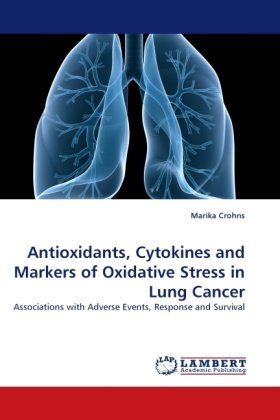


Lung cancer represents a major health concern with over 1.3 million cases diagnosed worldwide each year. Lung cancer is associated with increased production of reactive oxygen species (ROS). Also chemotherapy and ionizing radiation induce the formation of ROS. This book reviews studies examining the levels of various antioxidants, cytokines and parameters of oxidative and nitrosative stress in lung cancer patients and non-cancer controls. In addition, a comprehensive review of current literature is provided. The findings of the studies would indicate that lung cancer is associated with increased oxidative stress and production of certain cytokines. It was also demonstrated that bronchoalveolar lavage (BAL) fluid can be a useful medium for analyzing local cytokine and oxidative stress marker status. New, interesting data is provided as higher exhaled pentane levels seemed to predict better survival. In addition, these data imply that serum and BAL fluid IL-8 and thiols and serum VEGF may be useful prognostic factors in lung cancer patients. Dr. Crohns's groundbreaking research is a must-have for everyone interested in lung cancer research.
More Specification..!!
Antioxidants, Cytokines and Markers of Oxidative Stress in Lung Cancer: Associations with Adverse Events, Response and Survival
Tuesday, May 25, 2010
Breast Cancer Survival Rate - Stage 4 Breast Cancer
The breast cancer survival rate for Stage 4 breast cancer is much lower than for breast cancer detected at earlier stages.
Stage 4 breast cancer, or advanced breast cancer, has metastasized to other tissue including bone tissue, lung tissue, or the liver. When breast cancer has overwhelmed the body's natural defenses and spread this far by the time the cancer is first diagnosed, the 5-year survival rate drops to 16%-20% in the United States (American Cancer Society).
Up to 5% of white women in the U.S., and up to 9% of black women have advanced breast cancer spread to distant tissue at the time of first diagnosis (SEER). This difference is usually attributed to poverty and lack of health insurance.
In general, women who have advanced breast cancer at the time of diagnosis live approximately 18 months after diagnosis (median survival rate). Those who are still alive five years after their diagnosis of advanced breast cancer can live an additional 3.5 years (median survival rate) according to the American Cancer Society.
Since this is the most deadly category of breast cancer, it is important to work closely with all the health care providers. New treatments are being developed all the time, and second, or even third opinions may give the patient more information about newly discovered successful solutions.
Early detection is clearly the most important factor in breast cancer survival rates. Breast cancer detected at Stage 1 while it is still localized to the breast has a survival rate of 98%-100%, while metastasized breast cancer first detected at Stage 4 drops down to 16%-20%.
Early detection procedures must include monthly self-examinations done at the same time each month. From age 20-40, healthy women should have clinical breast exams performed by their health care providers every three years. After age 40, the breast exams should be annually and should include a mammogram or similar procedure.
North American white women have the highest rates of breast cancer in the world, but the 5-year survival rate for all stages (Stage 1, Stage 2, Stage 3, and Stage 4) combined is 88% for the U.S. A recent study found European countries have lower 5-year breast cancer survival rates, with England at 77.8% and Ireland at 76.2% (Lancet Oncology).
The difference in these survival rates is usually attributed to life-saving early detection.
Subscribe to:
Posts (Atom)

|

|

|

|
 |
 |
 |
 |
 |
 |
 |
 |